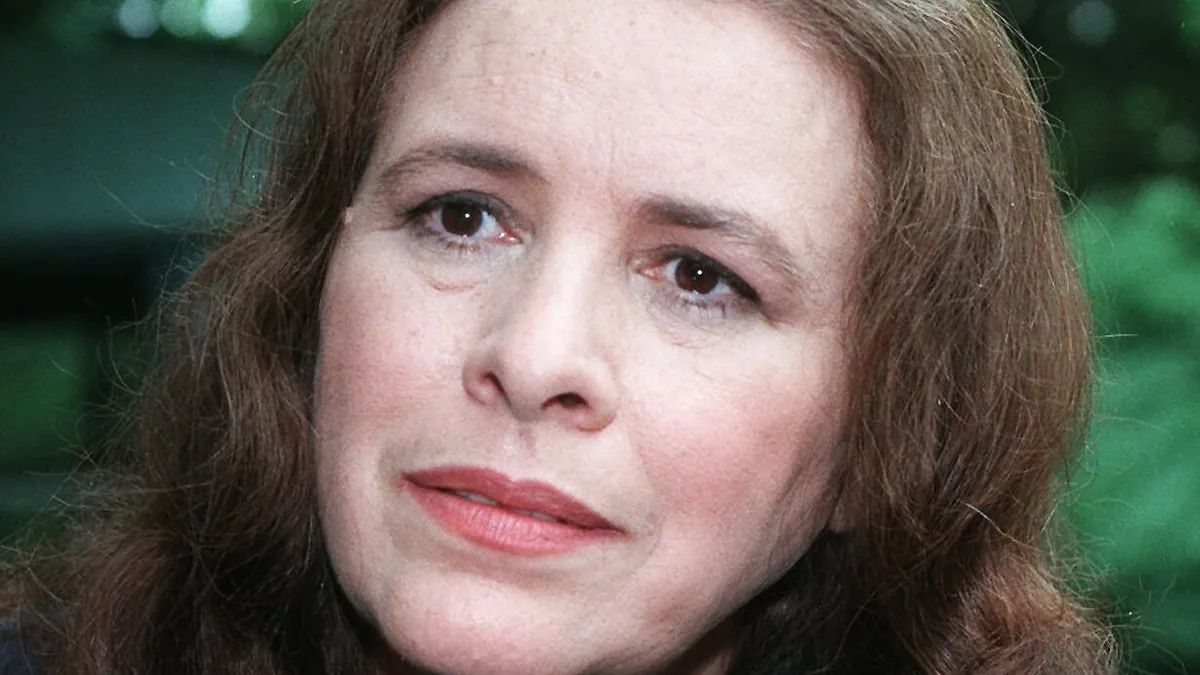

You have full access to this article via your institution. At 69, Melinda McKnight is as busy as ever. In the past year, she has organized several fundraising events around her hometown of Rison, Arkansas, and purchased Christmas presents for more than 100 local children as part of a charity she co-founded. She often looks after two of her six grandchildren.
None of this would be possible if the stage 1 cancer in her right lung hadn’t been caught three years ago. “I was blessed in so many ways,” McKnight says. In 2015, she heard that her employer would cover the cost of lung cancer screening. Her physician scheduled a low-dose computed tomography (CT) scan, which revealed a small lung nodule.
Initially, the lump didn’t meet the criteria for cancer. But McKnight returned for annual scans, and in 2023, a scan revealed that the nodule had begun to grow. Within months, she had surgery to remove the early-stage tumour. Today, she has no evidence of disease.
McKnight’s story could have been very different. The contrast between treating people with early compared with advanced disease “couldn’t be more striking”, says Jeffrey Chi-Fu Yang, a thoracic surgeon at Massachusetts General Hospital in Boston. When diagnosed at stage 1, 60–90% of people with lung cancer will still be alive after five years. That statistic drops as much as tenfold at the latest stages of disease.
This stark difference shows the potential that screening has to save lives. Among people with a history of heavy smoking, annual low-dose CT scans reduced the chance of death from lung cancer by 20% over six years in one study1 and by 24% over ten years in another2. Low-dose CT, which uses one-fifth of the radiation dose of conventional CT, has stronger evidence behind it than any other cancer-screening test, says Raymond Osarogiagbon, an oncologist at Baptist Cancer Center in Memphis, Tennessee. In 2013, the US Preventive Services Task Force (USPSTF) started recommending screening for some people with a history of heavy smoking.
In 2015, Medicare, the US federal health-insurance programme for people aged 65 and over, began covering the test for those eligible. But more than a decade later, only a fraction of these people are screened. A survey study funded by the American Cancer Society found that just 19% of people who meet the criteria have ever had the scan3. Meanwhile, about half of people who are diagnosed with lung cancer have never met the USPSTF criteria — they were outside the age range, smoked too little or stopped smoking too long ago.
“We know the criteria are not perfect,” says Osarogiagbon. “They weren’t cast stone tablets and handed down,” he says. Some researchers suggest that the best way forward is to eliminate smoking history from the criteria. “We in the United States need to figure out quickly how to thoughtfully screen people who have never smoked,” Yang says. But it’s not clear whether the benefits of screening people who have never smoked will ever be large enough to justify the risks. Benign lung nodules are common, and expanding screening will inevitably result in more people undergoing unnecessary biopsies, which come with the risk of bleeding and lung collapse.
Less invasive diagnostics, such as blood-based biomarkers and artificial-intelligence image analysis, could shift this risk–benefit debate. “We’ll have to innovate our way out of this,” Osarogiagbon says. McKnight’s primary-care physician was eager to get her screened. But another physician was sceptical. “He looked at me and said, ‘well that’s a bit of overkill, don’t you think?’”
Last year, Yang and his colleagues reported that in one cohort of people who were eligible for screening, about 60% underwent breast or colon cancer screening, but fewer than 20% were screened for lung cancer4. “Very few people know about lung cancer screening,” says Yang, who does community-outreach work as part of a non-profit organization, called the American Lung Cancer Screening Initiative, that he co-founded to remedy the imbalance. And the problem isn’t entirely one of poor publicity. According to a 2022 survey of more than 1,200 people with any smoking history, fewer than one-third had discussed screening with their physicians over the previous year5. Some state-run Medicaid health-insurance programmes, which cover people with limited incomes, do not cover the cost of screening, preventing many individuals from accessing it.
Ironically, this demographic, as well as those who don’t qualify for Medicaid but can’t afford other medical insurance, are more than twice as likely to smoke as those with private insurance or Medicare. Lung cancer screening has also had to overcome a popularity problem among physicians, according to Jacob Sands, a thoracic oncologist at Dana-Farber Cancer Institute in Boston. “In the early years, there was so much scepticism,” he says; many physicians thought that time and money would be better spent on getting people to stop smoking. There was concern that screening would detect large numbers of benign nodules, resulting in unnecessary medical interventions.
The landmark 2011 National Lung Screening Trial (NLST) report has a lot to do with that attitude. The abstract says that 96.4% of study participants had false-positive results, but researchers, such as Sands, say that this figure is misleading and has been incorrectly circulated for years. The actual false-positive rate reported in the paper is 26.6%; that’s the fraction of study participants who didn’t have cancer but who had nodules that later turned out to be benign. The larger 96.4% represents the percentage of total nodules that were benign.
Both values dropped over subsequent rounds of screening and false-positive rates overall have gone down since 2011, as techniques to classify nodules have improved. Finding a nodule doesn’t automatically mean surgery, or even a biopsy, Yang says. Most often, the follow-up involves keeping an eye on the nodule through CT scans. Some nodules, such as those caused by infection, disappear over time.
Another commonly cited barrier to screening uptake is the complexity of the eligibility criteria. “If you’re 45, your primary-care provider can say, ‘oh, you’re eligible to have mammography’. You don’t have to think about anything else,” says Gerard Silvestri, a pulmonologist at Medical University of South Carolina in Charleston. But there are several more boxes to check for lung cancer screening.
As well as being between 50 and 80 years old, a person must also have smoked the equivalent of one pack of cigarettes per day for 20 years — having what is known as 20 pack-years. But the pack-years figure is deceptively complex, Yang says. People smoke more or less heavily at different times in their lives. Recalling these details over a lifetime of smoking becomes burdensome in the context of a 20-minute physical examination that covers everything from cholesterol to back pain.
Some studies indicate that the number of years that a person smoked plays a bigger part in lung cancer risk than does smoking intensity. Yang’s group has found that focusing on the length of time rather than the number of cigarettes also reduces a racial disparity in screening eligibility between Black people and white people. In 2024, his team reported that, in a cohort of people living in the southeastern United States, ditching pack-years and simply offering screening to people who have smoked for at least 20 years increased the rate of Black people with lung cancer who would have been eligible from 58% to 85%. The eligibility of white people with lung cancer rose from 74% to 82%6.
Yang’s team is now testing how well the 20-year criterion performs at identifying lung cancer in Black women aged 50 or older with any smoking history. Although it was useful for trials such as the NLST, Yang says “it’s worth taking another careful look at pack-years” to assess whether it is still a sensible approach. The US National Comprehensive Cancer Network has already changed its screening recommendation to people aged 50 and over who smoked for 20 years. But some think that screening criteria need a bigger overhaul.
In November, thoracic surgeon Ankit Bharat and his colleagues at Northwestern University’s Feinberg School of Medicine in Chicago, Illinois, reported that only 35% of nearly 1,000 people with lung cancer met the USPSTF criteria. One of the top reasons for missing the criteria was never having smoked7. People who have never smoked make up 10–20% of lung cancer cases. They’re likely to be women, and Bharat says that many of his patients are also under 50.
They tend to be diagnosed at later stages, when symptoms appear. To Bharat, it doesn’t make sense that a 45-year-old mother of two, for example, should be diagnosed with lung cancer only once it has reached stage 4, simply because she hasn’t smoked enough, or at all. “I’m currently treating over 200 patients like this,” Bharat says. “How do we screen for them?” Studies done in Asian countries experiencing high rates of lung cancer in people who have never smoked have found that screening on the basis of other risk factors — such as a family history of the disease or exposure to cooking fumes — yields just as many, if not more, diagnoses as does focusing solely on smoking.
But because non-smoking risk factors vary so widely by geography and lifestyle, Bharat thinks that lung cancer screening, such as mammograms and colonoscopies, should be offered on the basis of age alone. “If you want to make a national impact on lung cancer deaths, we have to move away from risk-based screening,” he says. Bharat’s group modelled7 what would happen if everyone in the United States aged 40 to 85 was eligible for a low-dose CT scan at least once every ten years. They found that at current screening-uptake rates, this approach could prevent more than 20,000 lung cancer deaths a year. Bharat and his colleagues are now offering free, low-dose CT lung screening to anyone aged 21 and older who can travel to the Chicago area.
Silvestri doesn’t agree on the need for a national screening policy for people who have never smoked. “I’m sad that some of them develop lung cancer,” he says, but contends that the benefits don’t justify the risks of screening. “Anytime you expand your population, you are exposing people to harm,” he says. “The vast majority can only be harmed because they’ll never have had the cancer.” To Yang, the risks of not finding a case outweigh those of screening. Still, he doesn’t foresee the United States recommending such widespread screening without strong evidence that it saves lives — and that has yet to be shown. Researchers, including Silvestri, have argued that most of the cancers found in screening studies of people who have never smoked are likely to be over-diagnosed, and that whatever tumours they might have would never have grown to be deadly.
“Some nodules never grow,” Silvestri says, but once a biopsy or a positron emission tomography scan indicates that a nodule is cancerous, it has to be removed. AI-assisted CT analysis software could help to address this problem. Machine-learning systems can assist clinicians in deciding how best to follow-up on a nodule. One open-source program called Sybil is designed to predict lung cancer risk even when a nodule is not present.
Oncologist Lecia Sequist at Massachusetts General Brigham Cancer Institute in Boston and her colleagues trained Sybil on thousands of CT images from the NLST8. The program analyses subtle characteristics across a CT scan, not just in the lungs, and generates risk values for the next six years. Sybil has performed well at estimating lung cancer risk when tested retrospectively on CT scans from previous studies. Sequist’s team and other groups are testing how helpful it is in making clinical decisions about “when to act on something versus when to just monitor it,” she says.
The idea behind Sybil, Sequist says, is to have a method of estimating lung cancer risk that could open up screening to people who have never smoked. She and her colleagues are recruiting people with a family history of lung cancer for free low-dose CT scans, with the aim of validating Sybil in populations that are currently ineligible for screening. Rayjean Hung, a cancer researcher at Lunenfeld-Tanenbaum Research Institute in Toronto, Canada, says that it’s best to train machine-learning models on groups of people who are representative of the population for which it is intended. Hung’s team is developing a deep-learning model using scans from people with lung nodules found on CT scans that were done for other purposes.
Often, people with these incidental nodules that either are, or become, cancerous don’t meet screening criteria. Hung and her colleagues are studying differences between nodules that remain benign and those that become malignant; they hope to use that data to build a risk-assessment tool that integrates CT data, patient risk factors and biomarkers, such as protein levels in the blood and volatile-organic-compound concentrations in breath. One blood biomarker that could help to refine risk in people who are ineligible for screening is cell-free DNA, which bears unique signatures that indicate cancer’s presence in the body. DNA from growing cancers tends to over-accumulate epigenetic tags called methyl groups, explains Abhijit Patel , a physician-scientist at Yale School of Medicine in New Haven, Connecticut.
Several blood-based tests that measure cancer-associated changes to cell-free DNA methylation are already commercially available, although none are approved by the US Food and Drug Administration, so far. Patel’s group is examining densities of highly methylated regions across the genome that emerge early in cancer development. Using blood samples collected from volunteers at high risk of developing cancer, his team will track how the densities of cell-free DNA methylation change in the years leading up to a cancer diagnosis. The US National Cancer Institute is overseeing a large-scale prospective investigation called the Vanguard Study to test the feasibility of using these kinds of blood test to identify people at risk of ten cancers, including lung cancer.
Among other things, the study will examine how these tests affect the rates of unnecessary procedures stemming from cancer screenings. Bharat expects that these diagnostic tools will eventually transform lung cancer screening. In the meantime, however, he doesn’t think that people who are currently ineligible for screening, such as those that have never smoked, should have to wait. “Every year that we don’t do something, we’re losing a lot of lives,” he says. Osarogiagbon tries to keep the difference that screening has already made in sight. As McKnight’s experience illustrates, people are increasingly surviving lung cancer; US deaths from the disease have been dropping steadily since 2015.
Osarogiagbon hopes to keep that momentum going until everyone at risk has access to screening. “Now,” he says, “is not the time to back away.” This article is part of Nature Outlook: Lung cancer, a supplement produced with financial support from Daiichi Sankyo and MSD. Nature maintains full independence in all editorial decisions related to the content.
The National Lung Screening Trial Research Team N. Engl. de Koning, H. J. et al. N. Engl. Sonawane, K., Garg, A., Toll, B. A., Deshmukh, A. A. & Silvestri, G. A. JAMA Netw. Potter, A. L. et al. J. Clin.
Yang, H. C. et al. JAMA Netw. Mikhael, P. G. et al. J. Clin. Science takes on the world’s most lethal malignancy Drugs that boost immunity are making lung cancer less deadly
Good, but you could still get lung cancer How the connection between lung cancer and the brain could lead to better treatments Global lung cancer burden shifting to middle-income countries Why Africa’s low rate of lung cancer is an illusion
Partner content: AI could clear a path for precision medicine in lung cancer Global lung cancer burden shifting to middle-income countries Science takes on the world’s most lethal malignancy Global lung cancer burden shifting to middle-income countries
Science takes on the world’s most lethal malignancy The Heidelberg University Biochemistry Center (BZH) is seeking to fill a Full Professorship (W3) for “Biochemistry” (f/m/d) as soon as possib... Faculty/Independent PI positions at Shenzhen Bay Laboratory The Chinese University of Hong Kong, Shenzhen - School of Science and Engineering
CUHK-Shenzhen invites applications for faculty positions at all ranks to join our rapidly expanding AI ecosystem. Located in southern China's Guangdong Province, Shenzhen sits on the eastern shore of the Pearl River Estuary. It shares a southern border with Hong Kong and faces the South China Sea, forming a core geographic hub of the Greater Bay Area. We are seeking outstanding scientists to lead vigorous independent research programs focusing on all aspects of chemical biology including...