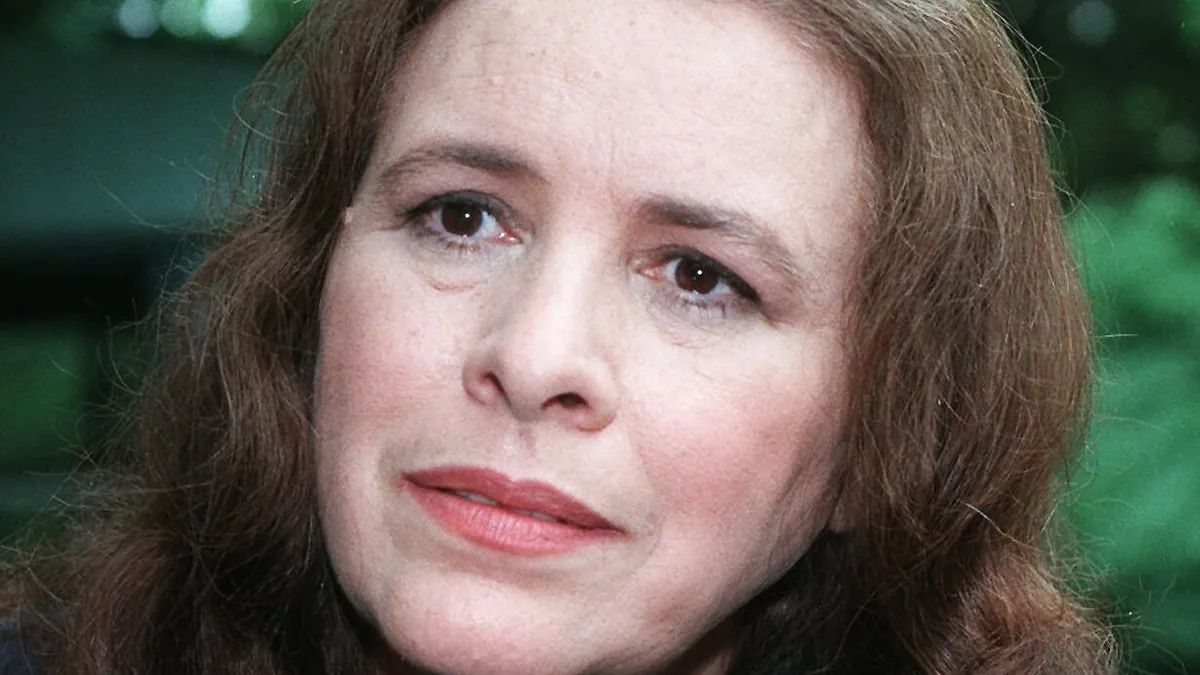

You have full access to this article via your institution. Acute stress makes it difficult to connect memories of past experiences with fresh information — a process crucial for making deductions. This could explain why people struggle to show insight under pressure. During psychological tests that involved making links between indirectly related pictures, brain imaging showed altered activity in the hippocampi of people who had been through a stressful mock interview compared with those of people who’d had to complete a simpler task, which suggests that their brains hadn’t inferred connections between the images as strongly.
Mathematicians at tech firm OpenAI have cracked an 80-year-old challenge in geometry by giving a single prompt to an AI chatbot. In 1946, mathematician Paul Erdős suggested the ‘best’ arrangement of points on a plane so that as many pairs as possible are at a given distance from each other. OpenAI’s bot has disproved Erdős by showing a better one. The company has revealed neither the full details of how the bot did it, nor which AI system they used, but the finding has been independently verified.
In the first major publication of his papacy, Pope Leo XIV has warned that artificial intelligence must be “disarmed” to prevent it from “dominating humanity”. The pontiff’s first ‘encyclical’ — a letter outlining his priorities and views on major societal issues — puts particular emphasis on the use of AI in warfare and urges that it be subject to “the most rigorous ethical constraints”. The Pope presented the document alongside Christopher Olah, co-founder of AI firm Anthropic, who at the same event urged governments and other religious leaders to take part in the oversight of AI technologies. In April, Anthropic announced that its model Claude Mythos was too dangerous to be released to the public because it had found vulnerabilities in every major operating system and web browser currently in use.
The decision marks a turn to secretive AI research that could become a trend, with potential knock-on implications for science, experts say. The possibility that powerful AI is eventually deemed a ‘dual-use’ technology — one that could be weaponized by the military as well as used in civilian society — also raises the question of whether governments should take control of who can access it. In The Brain, In Theory, neuroscientist Romain Brette makes the case to move away from the predominant model of the brain, which treats the organ like a computer. Brette argues that engineering metaphors are often vague and misleading, and attempts to breathe life back into brain science by focusing the study of the nervous system on biology.
“Brette’s take-down of the field’s dominant theoretical frameworks is systematic,” writes neuroscientist Àlex Gómez-Marín in his review. “The book is intense and intricate. One can get lost in it, but it is worth the adventure.” Countries hoping to cultivate talent to drive innovation need to invest in primary- and secondary-school science education, argue three education researchers. Such investment could enable schools to replace conventional teaching with projects that engage students in how science is actually done. The shift also requires a sustained investment in science teachers, providing them with the necessary training and professional development to facilitate a broader science-learning ecosystem.
“Countries that neglect these investments might still build excellent labs. They will find it much harder to build the talent that those labs need,” the authors write. Olympic rower Matthew Wells trialled prototype exercise equipment designed for space missions during a parabolic flight, which creates temporarily weightless conditions. On Friday, Leif Penguinson was relaxing alongside the sea otters at Moss Landing, California. Did you find the penguin?
When you’re ready, here’s the answer. • Nature Briefing: Careers — insights, advice and award-winning journalism to help you optimize your working life • Nature Briefing: Microbiology — the most abundant living entities on our planet — microorganisms — and the role they play in health, the environment and food systems • Nature Briefing: Anthropocene — climate change, biodiversity, sustainability and geoengineering
• Nature Briefing: AI & Robotics — 100% written by humans, of course • Nature Briefing: Translational Research — covers biotechnology, drug discovery and pharma Daily briefing: Wearable robot could help kids with neuromuscular disease to stand Daily briefing: Bogus citations will get you banned from arXiv
Daily briefing: How the ‘Enhanced Games’ could expose flaws in the sporting world Daily briefing: Mouse eyes can photosynthesize after a plant-to-animal transplant The Heidelberg University Biochemistry Center (BZH) is seeking to fill a Full Professorship (W3) for “Biochemistry” (f/m/d) as soon as possib... Faculty/Independent PI positions at Shenzhen Bay Laboratory
The Chinese University of Hong Kong, Shenzhen - School of Science and Engineering CUHK-Shenzhen invites applications for faculty positions at all ranks to join our rapidly expanding AI ecosystem. Located in southern China's Guangdong Province, Shenzhen sits on the eastern shore of the Pearl River Estuary. It shares a southern border with Hong Kong and faces the South China Sea, forming a core geographic hub of the Greater Bay Area.
We are seeking outstanding scientists to lead vigorous independent research programs focusing on all aspects of chemical biology including...