
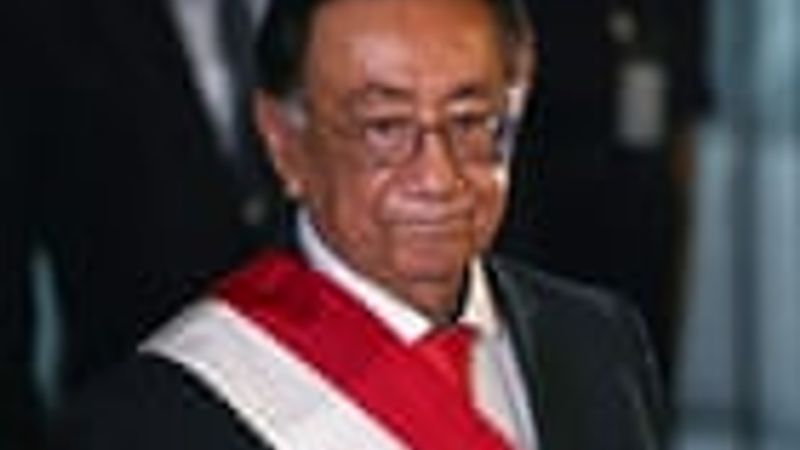
In Peru, the only political constant is chaos. With the ousting of José Jerí after just four months over a burgeoning scandal involving secretive meetings with Chinese businessmen, the country's fractured congress has installed its ninth president since 2016. The choice of José María Balcázar is less a solution and more a symptom of the disease.
This is not a story about a transfer of power. It's about a system's descent into absurdity. Balcázar, a veteran lawmaker from the hard-left Perú Libre party, was not the frontrunner. His victory over conservative favorite María del Carmen Alva reveals the transactional, deeply cynical nature of Peruvian politics. His elevation was likely secured not by a coalition of shared vision, but by a temporary alliance of factions united only by their desire to block a rival.
COMMENTARY: This is the core dysfunction of Peru's unicameral legislature. With no stable majority, governance has been replaced by a constant state of negative partisanship. Lawmakers are more effective at ousting presidents than passing laws or building consensus. Choosing a deeply polarizing figure like Balcázar as a caretaker president guarantees further gridlock, serving the interests of those who thrive on instability ahead of the April general elections.
Let's be clear about Balcázar's record. His defense of allowing marriage for children as young as 14 is not a minor footnote; it's a deeply alarming position that places him far outside the mainstream of both domestic and international norms. For a congress to select such a figure, even in an interim capacity, signals either a profound desperation or a chilling indifference to basic principles of child welfare. It hands his opponents a powerful weapon and ensures his brief tenure will be defined by controversy rather than stewardship.
Ultimately, Balcázar's presidency is a placeholder in a nation holding its breath. He is the consequence of a political class that has exhausted all credible options and is now scraping the bottom of the barrel. His appointment does nothing to solve the underlying issues of corruption and ungovernability that led to his predecessor's downfall. Instead, it serves as a stark reminder to Peruvian voters in April: the crisis is not about any single leader, but the broken system that keeps producing them.