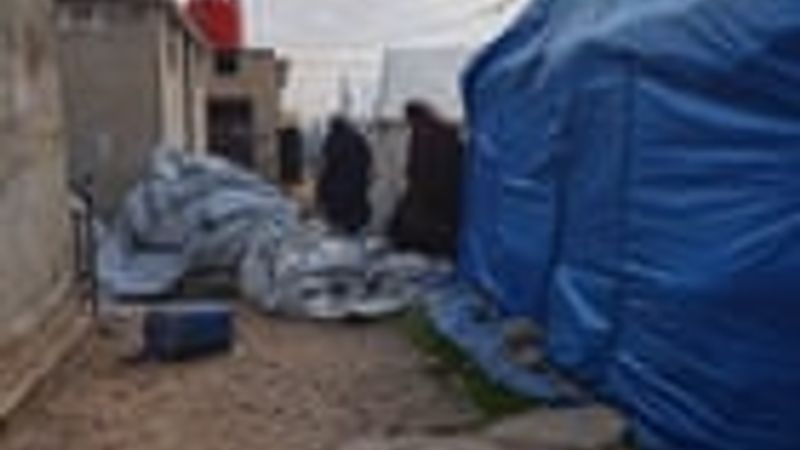
The grim reality on the ground in north-eastern Syria has taken a sharp, brutal turn. The 34 Australian women and children recently forced back to Roj camp returned not to a refuge, however squalid, but to a scene of calculated degradation. Their communal living space, known as 'Australia Street,' has been demolished. Their possessions are gone. Daily existence is now punctuated by near-nightly raids and violent beatings.
COMMENTARY: This is more than a simple deterioration of conditions; it's the systematic collapse of a fragile order. The destruction of 'Australia Street' is a symbolic and practical message: these individuals are stateless, unprotected, and at the mercy of shifting power dynamics within the camp. Western governments, including Australia's, have long operated under the assumption that these camps, while grim, were static holding pens. That assumption is now dangerously obsolete. Roj is a dynamic and volatile crucible, actively forging future security threats.
The calculus of risk, long debated in the corridors of Canberra, has inverted. The political fear has been that repatriating these individuals would import a security threat. Yet aid workers and security analysts on the ground argue the opposite is now true. Leaving citizens in what is effectively a lawless, radicalizing incubator presents a far greater and more unpredictable long-term danger. The question is no longer about managing a past affiliation, but preventing future extremism born of desperation and violence.
This forces an uncomfortable reckoning for the Australian government. The policy of deliberate delay and ambiguity has run out of road. By outsourcing responsibility for its own citizens, Canberra allowed the problem to fester. Now, it is confronted with the consequences: a humanitarian crisis that is simultaneously a burgeoning security failure.
The fate of these 11 women and 23 children has become a litmus test for Australia's willingness to confront complex foreign policy challenges. The choice is no longer simply about political optics at home, but about strategic foresight abroad. To continue to do nothing is an active decision—one that risks allowing a manageable problem to metastasize into an uncontrollable threat.