
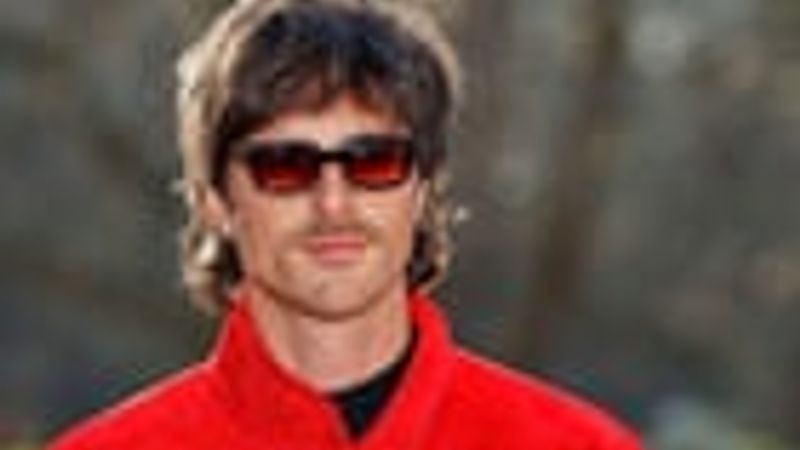
Forget the severe 'business in the front, party in the back.' The hockey flow, or 'lettuce' as it's been nicknamed, is all about nuance. It trades the mullet's abrupt, sheared sides for a soft taper, allowing a longer, textured top to cascade into a feathery sweep at the nape of the neck. It’s less a haircut and more a statement of studied nonchalance.
GokaNews Analysis: This trend's origin is its most telling feature. It wasn't concocted in a Parisian salon; it migrated from the subculture of ice hockey, where 'flow' is cultivated as a badge of honor under a player's helmet. Its leap from the rink to the A-list signifies a critical shift in the mechanics of trend-setting. The new arbiters of style aren't just designers, but authentic communities whose aesthetics are now being co-opted for their perceived realness.
The rise of the flow maps directly onto the evolution of male stardom. The rigid, hyper-defined male archetypes of the past are being supplanted by a softer, more expressive ideal. This haircut, with its fluid lines and gentle texture, is the perfect complement to the modern leading man—less action hero, more sensitive artist. It’s the hair of Timothée Chalamet, Austin Butler, and Paul Mescal: confident but not aggressive, stylish but not overwrought.
This aesthetic also reflects a post-pandemic rejection of high-maintenance routines. The sharp undercut that dominated the 2010s demanded constant upkeep and precision. The flow, by contrast, thrives on a bit of benign neglect. It’s a style that embraces natural growth and movement, aligning with a broader cultural pivot towards authenticity and effortless presentation. It's the grooming equivalent of luxury loungewear—comfortable, but intentional.
Ultimately, the flow is more than hair. It's a cultural barometer indicating where masculinity, sport, and fashion now intersect. It represents a thaw in rigid grooming standards, proving that the most influential trends no longer trickle down from the runway, but skate in from the most unexpected of arenas.