
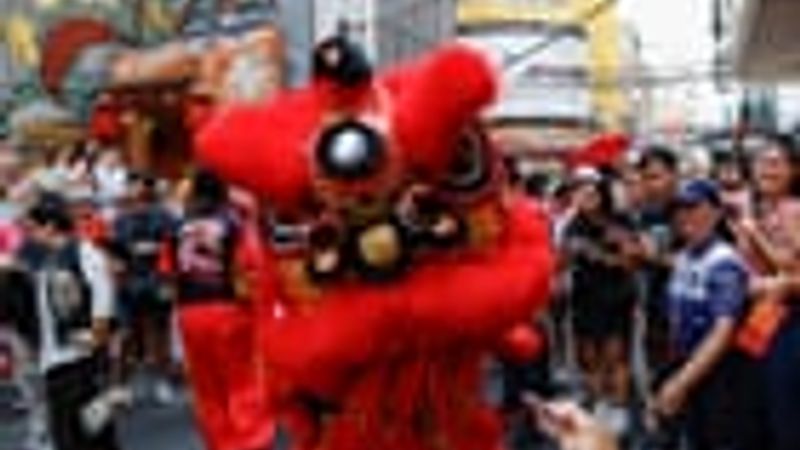
Amid the clang of cymbals and the vibrant energy of Lunar New Year in suburban Bangkok, a traditional lion dance snaked its way through the crowds. For onlookers, it was another welcome piece of the festivities. For one man, it was the closing of a dragnet.
Inside the elaborate red-and-yellow costume were officers from the Royal Thai Police. Their target: a suspect accused of pilfering Buddhist artifacts valued at approximately $64,000 from a local home. The operation was swift, surprising, and flawlessly executed as the festive lion revealed its true purpose, apprehending the individual mid-celebration.
Herein lies the critical insight. This was not simply a clever disguise; it was an act of tactical genius rooted in a deep understanding of the operational environment. In a city saturated with the delightful sensory overload of a major holiday, conventional surveillance becomes noise. Rather than fight the chaos, the police co-opted it. They hid in plain sight, using the very fabric of the celebration as a cloak of invisibility.
The strategy represents a powerful form of asymmetric policing. Where high-tech surveillance might fail or be too conspicuous, a low-tech, culturally integrated approach succeeded. It demonstrates an agility and resourcefulness that moves beyond standard operating procedure, tailoring the method to the moment. The officers didn't just go undercover; they became a living, breathing part of the cultural landscape they were policing.
Furthermore, the symbolism is potent. The lion dance is a ritual traditionally performed to scare away evil spirits and bring good fortune. In this context, the police used this symbol of protection to quite literally purge a criminal element from the community. They weren't just enforcing the law; they were performing a civic ritual, restoring order in a manner that resonated deeply with the cultural significance of the stolen artifacts.
This incident serves as a sharp reminder that effective law enforcement is not always about overwhelming force or technological superiority. Sometimes, the most powerful weapon is an intimate knowledge of the streets, the culture, and the rhythm of the people you serve. The Bangkok lion dance wasn't a stunt; it was a masterclass.