
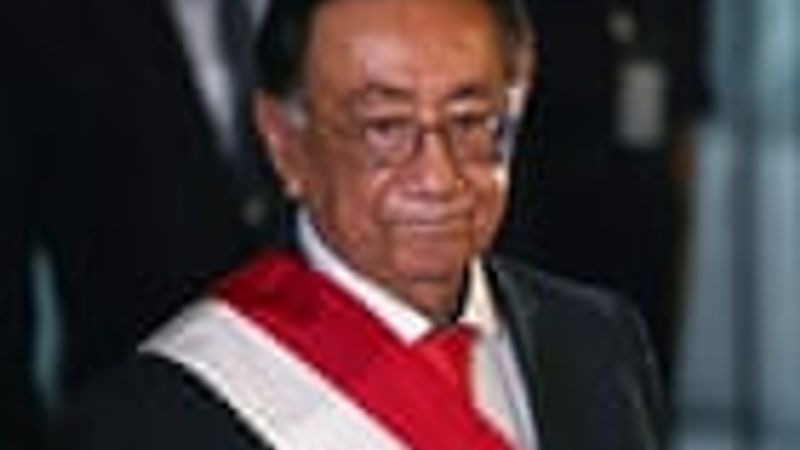
This isn't just another leadership change; it's a flashing red light for a political system in cardiac arrest. The constant churn of presidents—nearly one a year—has become the defining feature of Peruvian governance, a cycle fueled by endemic corruption and a bitterly fractured legislature.
Balcázar’s ascension is a direct consequence of the scandal that consumed his predecessor. José Jerí was ousted after a mere four months, brought down by allegations of secretive meetings with Chinese business interests. It’s a familiar script in Lima, where presidents are routinely impeached or imprisoned, but the outcome this time is particularly revealing.
COMMENTARY: The truly telling detail is not that Congress acted, but who they chose. In a surprise vote, lawmakers bypassed the conservative favorite, María del Carmen Alva, for Balcázar. This choice demonstrates a political class so consumed by factional warfare that a candidate's defense of child marriage is deemed a less significant liability than their opponent's political alignment. It suggests that for Peru's legislators, power calculus has completely eclipsed moral or social principles. The system is no longer just broken; it is navigating by a shattered compass.
The label “leftist” for Balcázar is almost meaningless here, a distraction from the deeper truth. His socially regressive stance complicates any simple ideological reading. Instead, his election should be seen as a product of desperation—a move by a congressional bloc to install a placeholder, however compromised, to thwart their rivals and maintain a fragile grip on power until general elections in April.
While Balcázar is merely a caretaker, his presidency serves as a grim caricature of Peru's governance crisis. He is less a leader than a symbol: a testament to a nation whose political institutions are so degraded they are willing to hand the presidential sash to almost anyone to simply keep the machinery from grinding to a complete halt.