
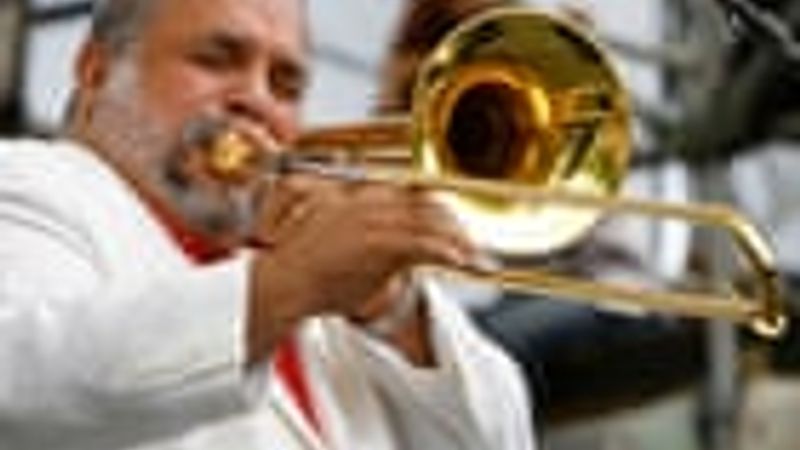
Forget the sanitized image of tropical music. Willie Colón was salsa's original 'El Malo'—the bad boy. This wasn't just a marketing gimmick; it was a declaration. His trombone wasn't the smooth, polished sound of ballrooms; it was a brash, aggressive roar from the fire escapes and concrete canyons of the South Bronx. He channeled the grit, danger, and defiant pride of the Puerto Rican diaspora into a sound that was entirely new.
Colón was the driving force behind Fania Records' golden era, a hitmaker whose genius was amplified through his legendary partnerships. With vocalist Héctor Lavoe, he created a catalogue of street-level epics, capturing the joy and tragedy of barrio life. With Rubén Blades, he elevated salsa to the realm of sophisticated social and political commentary, crafting narrative masterpieces like "Pedro Navaja" that became anthems across Latin America.
GokaNews Analysis: Colón's true innovation was treating salsa as a canvas for the urban immigrant story. While others focused on danceable rhythms, Colón used those rhythms to tell complex tales of identity, displacement, and survival. He weaponized the trombone, making it a lead voice that was often dissonant and confrontational, perfectly mirroring the tension of his lyrical themes. He didn't just play Latin music; he forged a sonic identity for a community caught between two worlds.
His musical palette was vast and voracious. He pulled from the improvisational fire of jazz, the raw energy of rock, and the deep rhythmic wells of African, Brazilian, and Caribbean traditions. But it was never a simple fusion. It was a chemical reaction, producing a sound that was uniquely New York—unapologetic, complex, and relentlessly cool. This is why his influence endures far beyond the salsa clubs.
While the industry metrics are staggering—over 30 million albums sold and a cascade of awards—they are merely byproducts of his real achievement. Willie Colón gave a generation its soundtrack. He proved that music from the margins could conquer the mainstream without sacrificing its soul or its message. The stage is now empty, but the echoes of that trombone, a sound of rebellion and resilience, will reverberate forever.